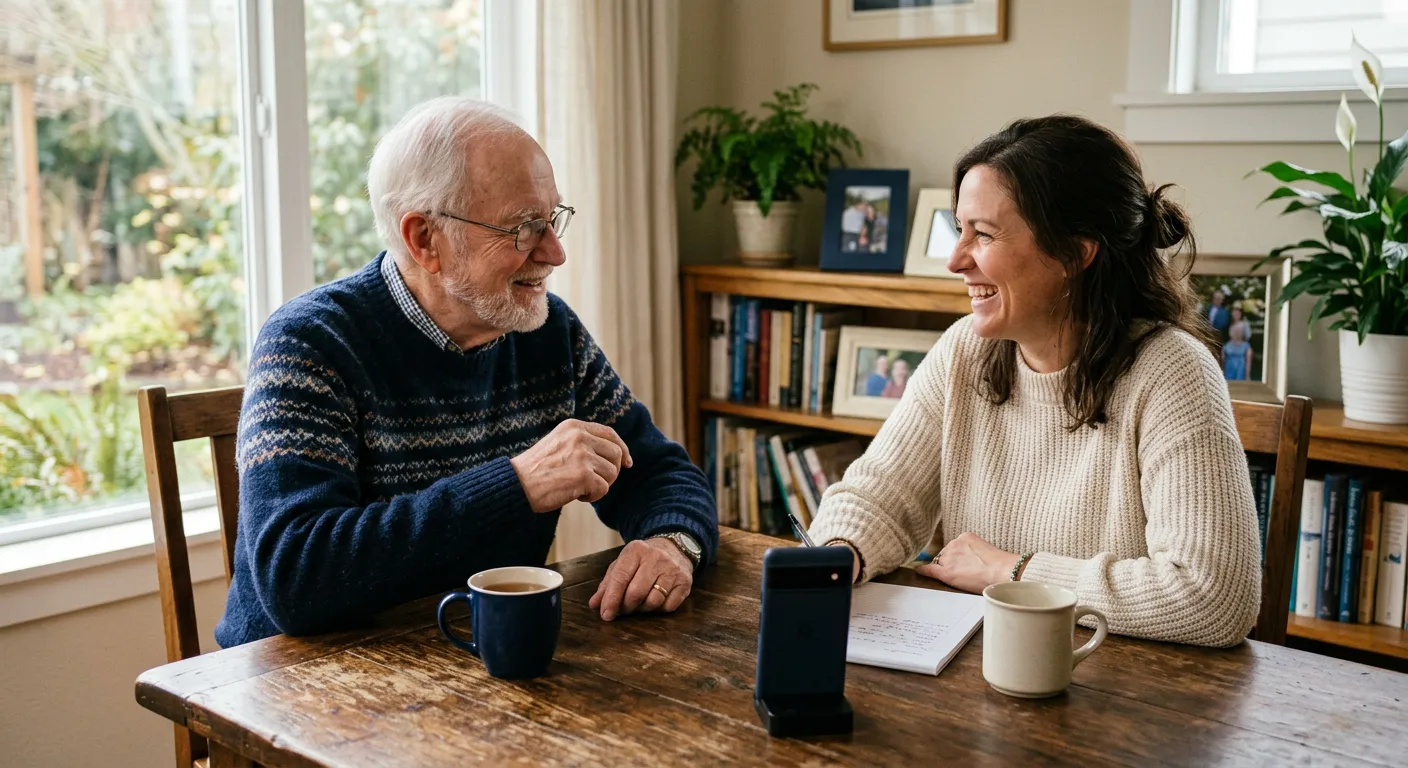
You sit across from your father, coffee growing cold between you. You've been meaning to do this for years. Record his stories, capture his memories, preserve the history that only he knows. But every time you think about starting, you feel overwhelmed. Where do you begin? What do you ask? How do you make sure you don't miss anything important?
This guide will walk you through everything you need to know to record your parents' life stories - from preparation to preservation. By the end, you'll have a clear plan and the confidence to begin.

Why This Matters (More Than You Think)
Before we dive into the how, let's talk about the why. Recording your parents' life story isn't just a nice project. It's essential for several reasons.
Irreplaceable history. Your parents are living links to a world that's disappearing. They remember a time before smartphones and the internet. Historical events they witnessed firsthand. Family traditions and recipes that exist nowhere else. The stories behind old photographs.
Emotional resilience for children. Research from Emory University shows that children who know their family history are more resilient and have higher self-esteem. They feel grounded, connected, and confident.
Healing and connection. The process of sharing stories can be therapeutic for your parents - feeling heard, valued, and remembered. For you, it's an opportunity to see them as whole people, not just "Mom" or "Dad."
A gift to future generations. Your grandchildren may never meet your parents. But they can know them through their stories.
Phase 1: Preparation (Before You Press Record)
Good preparation makes the difference between a scattered conversation and a meaningful record. Here's how to prepare.
Choose Your Recording Method
You have several options, each with pros and cons.
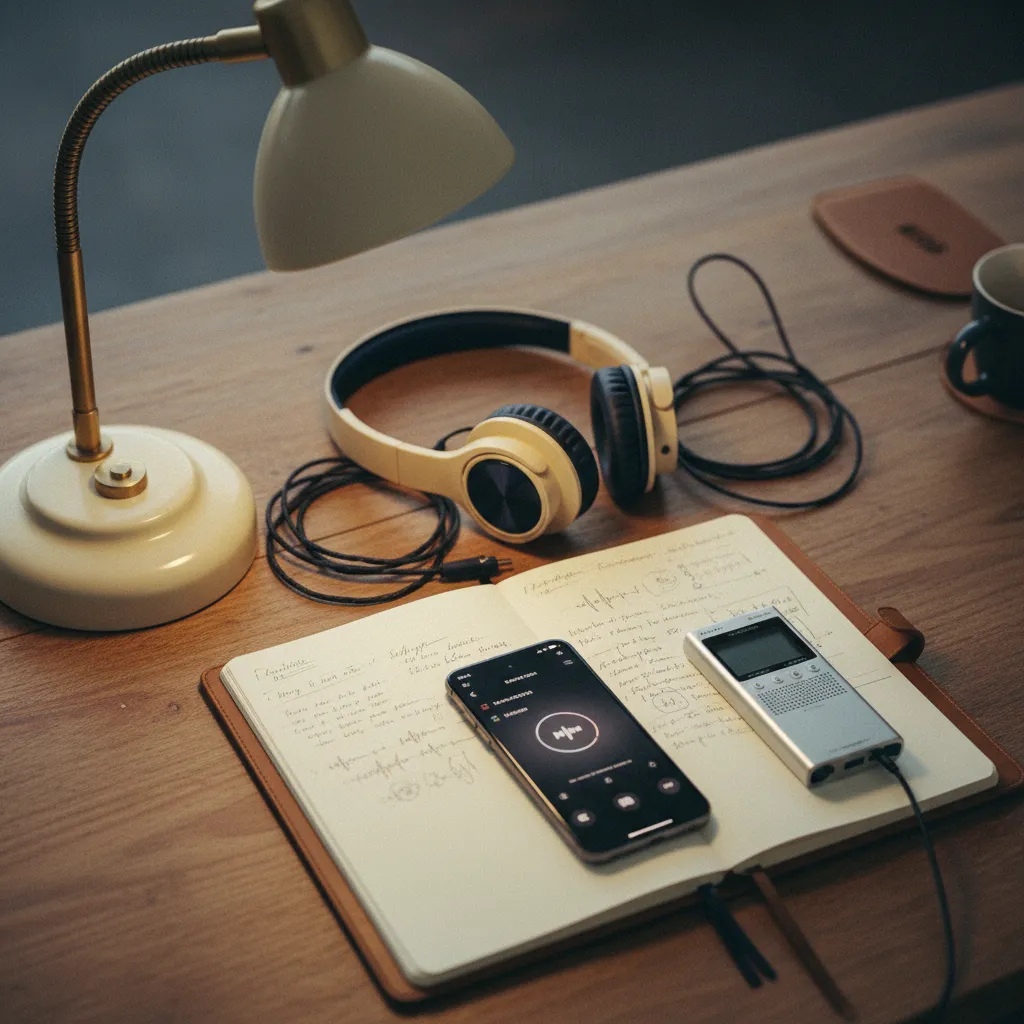
Smartphone voice recorder: Always available, decent quality, easy to share. But can feel impersonal, and files are easy to lose. Best for getting started quickly and casual conversations.
Video recording: Captures expressions and gestures, creates a visual record. But some parents feel self-conscious, and file sizes are larger. Best for important stories and creating visual memories.
Dedicated voice recorder: Better audio quality, feels more "official." But it's another device to manage, and files need transferring. Best for serious projects with multiple sessions.
Voice-to-story apps: Automatic transcription, organization, and formatting. Requires smartphone comfort. Best for creating polished outputs without manual work.
Set the Stage
Environment matters. Choose a quiet space without background noise. Comfortable seating arrangement. A time when your parent is relaxed and energized. Good lighting if recording video.
Pro tip: Do a 30-second test recording to check audio levels and background noise before starting the real interview.
Prepare Your Parent
This is not an ambush. It's a collaboration. Before you begin:
- Explain your goal. "I want to record some of your stories so the kids can know who you are."
- Set expectations. "We can do this in short sessions. No pressure."
- Give them time. Let them think about what they want to share.
- Make it comfortable. Emphasize that there are no wrong answers.
Phase 2: The Questions That Unlock Everything
The quality of your recording depends largely on the questions you ask. Here are proven prompts organized by category.
Childhood and Family Origins
- What do you know about the day you were born?
- Tell me about your childhood home. What did it look like?
- What was your mother like? Your father?
- What are your earliest memories?
- What did your family do for fun when you were young?
- Tell me about your siblings. What was your relationship like?
School and Growing Up
- What do you remember about your first day of school?
- Who was your favorite teacher? Why?
- What were you like as a teenager?
- What rules did your parents have? Did you follow them?
- What was your first job? How did you get it?
Love and Relationships
- How did you meet Mom/Dad?
- What was your first date like?
- When did you know you were in love?
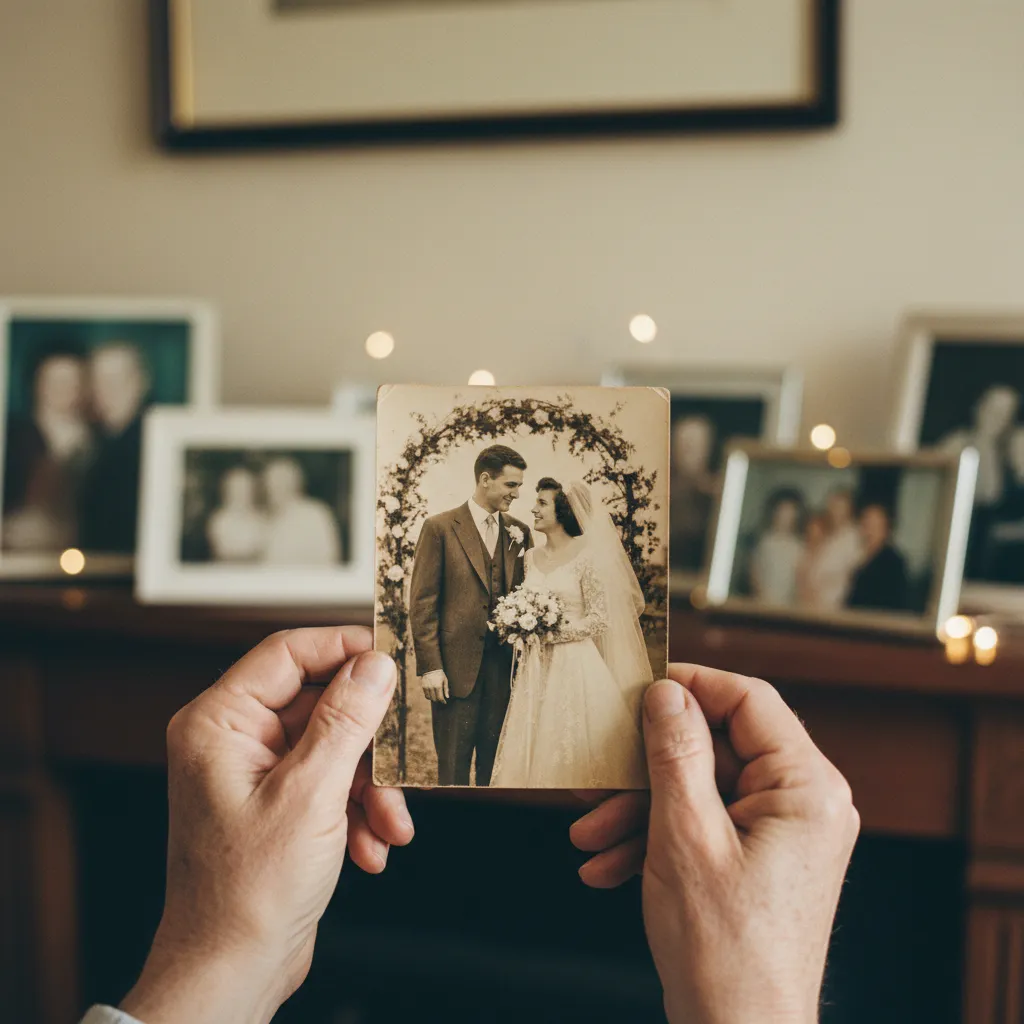
- Tell me about your wedding day.
- What was the hardest part of your first year of marriage?
Hardship and Resilience
- What was the hardest time in your life?
- How did you get through it?
- What did you learn about yourself?
- What are you most proud of overcoming?
Values and Wisdom
- What values were most important to you as a parent?
- What do you wish you had known when you were my age?
- What's the best advice you ever received?
- What do you want to be remembered for?
Fun and Lighthearted
- What was the happiest day of your life?
- Tell me about your best friend growing up.
- What was your favorite vacation?
- Tell me about a time you got in trouble.

Phase 3: The Art of the Interview
Asking questions is just the beginning. Here's how to conduct interviews that yield rich, meaningful stories.
Listen More Than You Talk
This is their story, not yours. Your role is to ask the opening question, listen actively, ask follow-up questions, and resist the urge to interrupt with your own stories.
Follow the Emotion
When your parent's voice changes - whether with laughter, tears, or excitement - pay attention. These emotional moments often contain the most important stories.
Follow-up prompts:
- "Tell me more about that."
- "How did that make you feel?"
- "What happened next?"
- "Why was that important to you?"
Embrace Silence
Don't rush to fill pauses. Sometimes your parent needs time to remember details, process emotions, or find the right words. Silence isn't awkward - it's space for reflection.
Capture the Details
Specifics make stories come alive.
Instead of: "We were poor." Ask: "What did 'poor' look like? What did you eat? Where did you sleep?"
Instead of: "It was a hard time." Ask: "What specifically made it hard? What did you do to get through each day?"
Phase 4: Technical Best Practices
Recording Tips
Audio quality: Place the recorder 2–3 feet from your parent. Minimize background noise - turn off TVs, fans, etc. Do a test recording and listen back. Have backup batteries or charging cables.
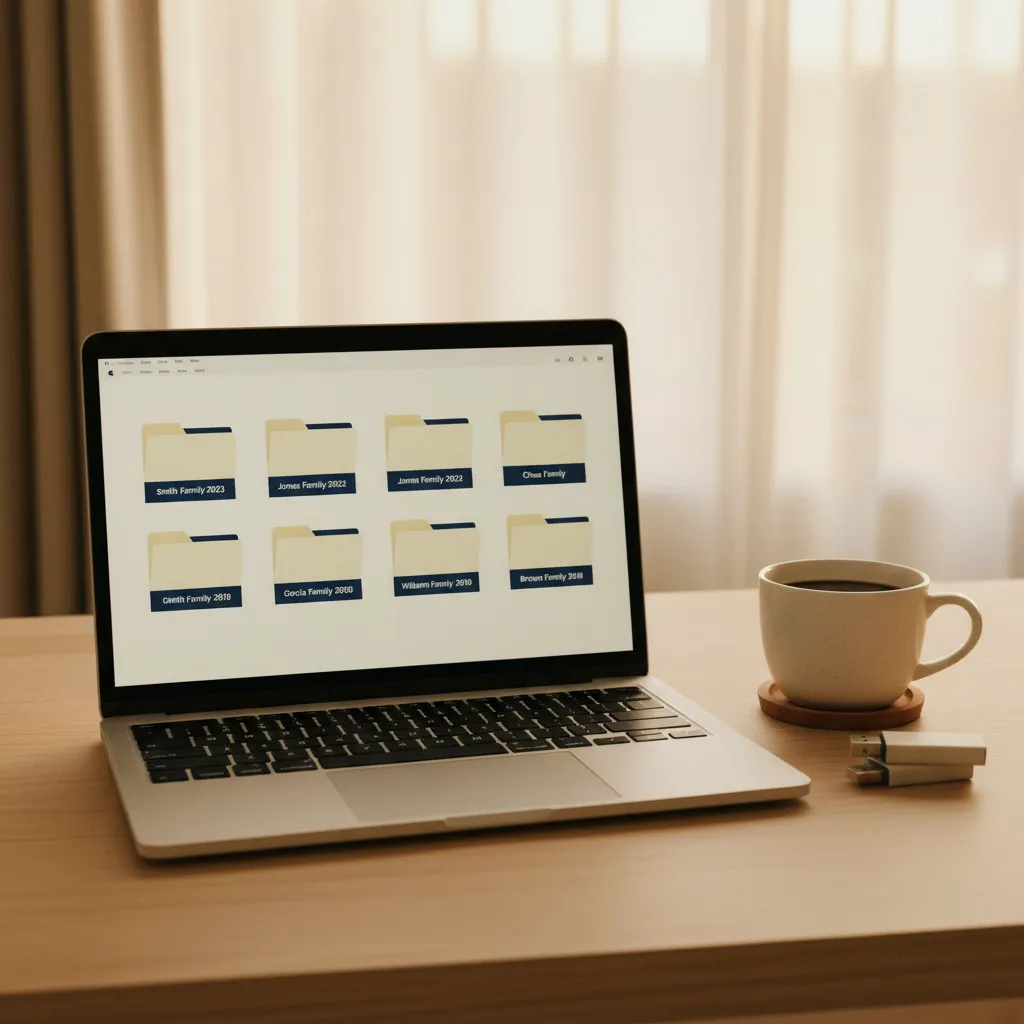
File management: Name files immediately: "Dad_Stories_2026-04-20_Session1." Back up files in multiple locations. Consider cloud storage for safety. Keep a log of what's in each recording.
Session Structure
Ideal session length: 45–60 minutes.
- First 5 minutes: Warm-up, casual conversation
- Next 45–50 minutes: Main interview
- Last 5–10 minutes: Wrap-up, schedule next session
Watch for fatigue. If your parent seems tired, wrap up early. Quality matters more than quantity.
Phase 5: What to Do With the Recordings
Once you've captured the stories, you have several options.
Option 1: Keep raw recordings. Store audio and video files securely. Share with family members. Simple but lacks organization.
Option 2: Transcribe manually. Type out the conversations. Time-consuming but accurate. Creates searchable text.
Option 3: Use transcription services. AI or human transcription. Faster but may have errors. Requires review and editing.
Option 4: Voice-to-story tools. Automatic transcription and organization. Creates formatted narratives. Can generate multiple outputs - books, audio, and more. Best for creating polished final products.
Common Challenges (And How to Solve Them)
"I don't remember"
Try this: Use sensory triggers. Show old photos. Play music from their youth. Visit meaningful locations. Cook a family recipe together.
"My life wasn't that interesting"
Try this: Reframe the conversation. "I'm not looking for 'interesting' - I'm looking for YOUR story." Share why specific memories matter to you. Ask about everyday life, not just big events.
"This feels like homework"
Try this: Make it social. Do it over a meal. Include other family members. Keep sessions short. Focus on fun memories first.
Technical difficulties
Try this: Keep it simple. Start with smartphone recordings. Don't worry about perfect quality. Focus on the conversation, not the equipment.

Creating Something That Lasts
Recording your parents' stories is just the beginning. Consider these ways to preserve and share what you've captured.
For immediate family: Share audio files via cloud storage. Create a private family website. Make copies for siblings.
For future generations: Compile stories into a printed book. Create video documentaries. Build an archive with photos and documents.
For the wider world: Write articles based on their experiences. Share anonymized wisdom on social media. Donate oral histories to local archives.
Your Action Plan: Start This Week
Day 1–2: Choose your recording method and test it.
Day 3: Have the conversation with your parent about the project.
Day 4: Prepare your first 10 questions.
Day 5: Set up your recording space.
Day 6–7: Conduct your first session.
Remember: you don't need to capture everything in one sitting. This is a marathon, not a sprint. Even one recorded story is infinitely better than none.
Your parents' stories are leaving every day. But you can capture them. You can preserve them. And you can give your family the gift of knowing where they came from. Start today.
Ready to save your family's stories?
Start recording today. It only takes a few minutes.
Start for free